




Renowned Heartbreakers Drummer Stan Lynch Becomes Top Songwriter & Producer
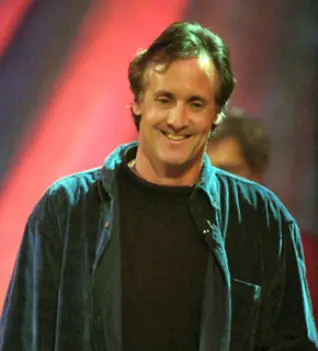
Stan Lynch is a highly respected musician, songwriter and producer, who has worked and collaborated with several of the most influential rock artists of the past two decades. Probably best known for having been the longtime drummer and founding member of Tom Petty & The Heartbreakers, Lynch has also toured the world with Bob Dylan, and written and produced songs for Don Henley, the Eagles, the Mavericks and many others.
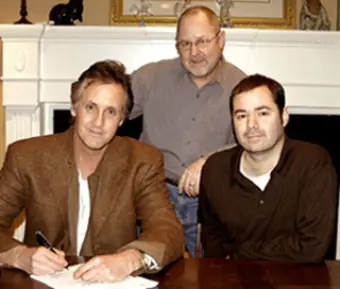
In a recent interview, Lynch recalled some of his most memorable experiences, including his 2002 induction into the Rock and Roll Hall of Fame, and discussed his recent publishing contract with Sony/ATV Tree Music Publishing in Nashville.
As a teenager growing up near Gainesville, Fla., Lynch determined that he would find a way to make a living with music. ‘As a kid I had very little opportunity. I was a marginal student. I wasn’t going to college. My parents didn’t have money.’
‘I played guitar and piano, and I always thought I was going to be a guitar player,’ said Lynch. ‘The drums were sort of a happy accident. I didn’t really think that they would be my ticket out of the ghetto. Choosing to be a musician back then was not like choosing a job, but an entire lifestyle. My father looked at me as if I were going to wear a dress and dance in the circus.’
Lynch joined the Heartbreakers in 1974, when he was recruited by Petty’s piano player Benmont Tench. Although most of the band hailed from Gainesville, they didn’t officially become the Heartbreakers until they came together in Los Angeles. ‘It was just kind of an organic, nebulous way we all got back together again in California,’ he said.
During the twenty years that Lynch played with the Heartbreakers, he said he only contributed to the songs, but never co-wrote or collaborated with Petty. ‘It was his music and his vision,’ said Lynch. ‘It was called Tom Petty and the Heartbreakers for a reason.’
By the early ’90s, Lynch had begun to evolve away from the Heartbreakers. ‘When I grew up, drummers were explosive, like buckets of bolts rolling downhill,’ he recalled. ‘The drums for me were not really a discipline but more of an expression. After a while, drums became relegated to sort of just the timekeeper. It was a different job, and not a job I wanted to have. I began to think I was getting in the way more than anything, and it was time for me to step aside and let everyone get on with their lives and get what they needed. I was making the wrong noise. There’s a graceful time to walk away from anything.’
However, Lynch said the experience gained from his time with the Heartbreakers was priceless. ‘Tom is a really prolific songwriter and working around his sensibilities for so many years was a great learning curve. Seeing his process and how his songs morphed over the years was really a seminal experience for me, as was the couple of years I spent playing drums for Bob Dylan, who I went around the world with a couple of times. If you think you’re ever going to try to be songwriter, go work with guys like that. Even if you’re just going to shine Bob’s shoes you’d learn something.’
‘I got to play on really great songs and that was part of the experience of being a drummer. What I learned is that it’s harder to play on crummy songs,’ said Lynch, who now, as a producer finds it necessary for musicians and songwriters to understand one another’s craft. ‘Musicians sometimes think they’re just playing their instrument, when what they’re really doing is playing a song. It sometimes takes awhile for them to discover that. It took me about five years. Writers are a different breed. I’ve sat on both sides of the glass now and it’s really been helpful. I feel sorry for songwriters who haven’t been in a band because they’re very demanding and they don’t understand how to communicate to musicians what they really want. And I feel sorry for some musicians who don’t try to write, because they don’t realize how precious a piece of work they’re playing on. There might not be another great one coming along, so be careful.’
In the early ’80s Lynch met writer/producer Danny Kortchmar. ‘He was a really great writer and musician, almost like a prodigy guitar player,’ Lynch said of Kortchmar, who started writing in the ’70s with Jackson Browne and performed on albums such as Carole King’s Tapestry. ‘He was a part of this thing called ‘The Section’ in Los Angeles and they played on all the great singer-songwriter records. I met (Kortchmar) when Don Henley was making his first solo album. He produced and co-wrote most of the stuff with Don and he brought me in. That’s how I started writing with Don.’
Lynch said he finds something really special about songwriters like Henley who have worn many different hats in the music business. ‘Don’s a drummer, but he’s a fabulous writer and he understands that a song has to work on many different levels. He once said to me that a song has to work from the waist down and from the neck up. He’s very calculating and visceral about his approach to songwriting and I learned a lot from him, whereas Petty was more stoic. He never shared his thought processes.’
The first song Lynch remembers actually making it to the radio was a song co-written with Henley called ‘The Last Worthless Evening.’ ‘Don came in and had part of the song and we just put it together from there. I knew it was getting pretty popular when my parents told me they’d heard it playing in the grocery store,’ he laughed.
Henley’s willingness to share his wisdom is no small matter to Lynch. ‘Don’s really been a long confederate of mine,’ he said. ‘There’s no way I could thank him enough. In the ’80s he encouraged me to write. He told me, ‘you’re a funny guy; you ought to write this stuff down.’ That’s how casually he ushered me into my next life.’
To help refine his songwriting skills, Lynch said Henley and Kortchmar gave him a title, a legal pad and a track on a cassette and told him to write some words to a song that became ‘Driving With Your Eyes Closed’. ‘I came in with the pad full of ideas and the first thing Don did was correct all my punctuation and spelling with a red pen. He said, ‘I can’t look at this crap, I can’t read a thing on here.’ These guys were so straight up with me, like only brothers could be. They got me reading better books and helped me step up to the plate professionally. They told me that I could really be something.’
As soon as Lynch was officially out of the Heartbreakers, he was invited to work with Henley and Kortchmar, who welcomed him to the next chapter of his life. ‘Those kind of people are invaluable,’ said Lynch. ‘Every writer has somebody who opens a door for them and there’s no question in my mind that these guys did that for me.’
Henley asked Lynch to help write some of the songs for his solo album, Building the Perfect Beast and Lynch became even more involved in the following End of the Innocence album. In addition, Lynch co-wrote ‘Learn To Be Still’ for the Eagles’ Hell Freezes Over album and co-wrote and produced many of the songs on Henley’s most recent album, Inside Job. ‘(Henley and Kortchmar) were true friends and they still are,’ said Lynch. ‘I talk to them most every week.’
During his first trip to Nashville in the early ’90s, Lynch was introduced to Raul Malo of the Mavericks, with whom he wrote ‘I Should Have Been True,’ a song intended as a homage to the late Roy Orbison. ‘Raul is a great singer and we got together and started talking about (Orbison) and we decided to just go there,’ he said. Lynch also attributes Don Cook’s production abilities to the song’s unique sound. ‘That was a very exciting experience.’
Lynch said he loves the camaraderie of collaborating on songs. ‘I’m not really very self-motivated,’ he said, ‘ and collaborating also doubles as my social life. I love working with soulful people. Whatever my partner needs, I’m right there for them. I try to look at songwriting as my hobby. The writing has never really felt like work. I’ve taken the pressure off myself and it’s really beautiful.’
In addition to songwriting, Lynch has found that he enjoys the production end of the music business. ‘It gives you a level of control to produce the songs you write. There’s also a real trust issue there. If somebody lets you produce their songs, you have to protect them. I would love to do it more and more. I think the job of a producer is to make sure nobody drops the ball. It’s a really big responsibility.’
In 1997, Lynch produced a handful of songs on the CD All the King’s Men, a tribute to Elvis Presley on the 20th anniversary of his death. In addition to Scotty Moore and D.J. Fontana of Presley’s original Blue Moon Boys, an impressive lineup of performers signed on to the project. ‘I got to work with Keith Richard, Levon Helm and the guys from The Band. It was a crazy room to be in,’ Lynch recalled. ‘It was really memorable.’
Working in Nashville has been a positive experience for Lynch, who just signed a publishing deal with Sony/ATV Tree. ‘They’ve got me feeling my way through a roster of writers,’ he said, ‘and the writers I’ve teamed up with so far, like Steve Bogard and Tom Douglas are really some soulful, beautiful people. These guys have a lot of heart. They have really helped show me the ropes in Nashville.’
Arthur Buenahora, Senior Director of Creative Services & Production at Sony/ATV Tree, said he felt Lynch was a perfect fit for Nashville. ‘Stan’s a great songwriter and a great producer,’ said Buenahora, who admitted to being a fan of Petty and the Heartbreakers. ‘I’d like for Stan to team up with other writers and see what fits.’
There are no particular artists in mind yet for Lynch’s songs, said Buenahora. ‘With someone like Stan, we’re waiting for the right opportunity to come along and we’re looking for production opportunities for him as well. I’m very confident that we’ll find the right situation for him.’
Lynch said the nice thing about a publishing deal is that the record company handles the business end of the process, allowing for more time to be creative. ‘I’m going to write the best songs I can. I don’t want to play the politics. I want my work to speak for itself and that’s where Arthur comes in. He’s my representative. If he feels my work should go to certain people, then I’m going to let him be my discriminator. I don’t understand the politics of how songs get placed. I’m just learning the game. I want to surround myself with the best writers and singers that I can.’
‘Arthur’s been a huge champion for my cause. He stepped up the plate and asked me to work. I need Arthur and hopefully he needs me. I think there’s some symbiosis going on here. I’ll be the bohemian with the old beat up guitar on my back saying ‘I think I’ve got what you need,’ and he’ll be the guy with the suit and the pen who knows where to go with it. That’s what I want from Nashville. That’s my dream.’
The shift in the styles of music coming out of Nashville is a motivating factor for Lynch. ‘The music in Nashville now is more like rock and roll. The Rolling Stones’ ‘Honky Tonk Woman’ would have been a hit country song today. It wouldn’t even get played on rock stations. I grew up listening to the music from the ’60s and ’70s, and made it my life, so I know what that kind of music is all about.’
Lynch is also a fan of many Nashville artists. ‘Vince Gill just blows me away. He strikes me as somebody who’s got a lot of integrity. Unfortunately, I don’t think he needs my help. Then there’s Willie Nelson. I’d love to know even a tenth of what he knows on the guitar. He’s a movable feast. Alan Jackson seems so natural. He has a real effortless way about him and that’s not easy.’
For aspiring songwriters, Lynch offered some philosophical advice. ‘The first thing should do is ask yourself if this is something you really want to do,’ he said. ‘Do you love this? Is this your life’s work? There is no short form to this, no class you can take, no ring to kiss. If you love it, you can do it for the rest of your life. Will you make a living at it? There’s no way to tell. If you have a passion for what you do, you probably will do okay. Make the best music you know how, and when you get to the level where you need to be, you’ll get heard. Also, surround yourself with people who are better than you are. Get in a room with somebody so good, you’re blown away by it. Keep your mouth shut and your ears open and just learn.’
‘Tom (Petty) used to say, ‘take care of the music and maybe someday the music will take care of us,” said Lynch. ‘I was about 18 when he said that and I thought it was so profound.’ Petty’s statement certainly proved to be true. In 2002, Tom Petty & the Heartbreakers were inducted into the Rock and Roll Hall of Fame.
For someone who has been an elite member of the music world for nearly three decades, Lynch said he still has one unrequited desire. ‘I’d like to run a record company for a year,’ he said. ‘I would let all the gatecrashers in. I’d create a dynasty of insanity. I’d like to build careers all the way through to the greatest hits album. I’m tired of the flavor of the week and all the pretty little people. The world is just too glossy. Bring me the greasiest, craziest people out there. I want to hear some bands who can make some noise on their own. I can create a noise for you for a half a million dollars, but why? If they can’t make a noise of their own, they don’t need to be here. I want legends. I want to hear bands that stop me in my tracks. I would love to be the gatekeeper.’
Despite his success in Nashville, Lynch continues to make his home in his native Florida. I grew up in a small town in Florida and there’s something nurturing about being in a place where everyone knows everyone. I find as I get older, I appreciate that more. When I go to Nashville, I’m so excited to be there. I never want songwriting to be a job for me. I won’t let that that happen. It’s too much of a sacred trust to me. It’s a huge blessing to be able to make music. I look at every year and I can’t believe I get to put ‘musician’ on my tax return.’
Jayne Moore is a freelance music/entertainment journalist. She has launched a new service, writing bios, articles and press releases. Moore can be contacted at [email protected]. You can also visit her website: www.musicgerm.com.
- Writer/Producer Toby Gad Has Breakthrough Hit, Co-Writing #1 Hit “Big Girls Don’t Cry” With Fergie - September 8, 2007
- Pop/Punk Band Plain White T’s Break Through With Their Number One Hit Single, “Hey There Delilah” - July 2, 2007
- Pop Stars Aly and AJ Talk About Their Album Insomniac, Their Hit “Potential Breakup Song,” And Writing Their Songs - August 14, 2007
