

 |
Billy Steinberg Enjoys Continued Hit Success, With Both His Classic and New Songs
By Jayne Moore
The work of hit songwriter Billy Steinberg illustrates the
fact that great songs can have lasting impact through generations of music
lovers. Steinberg and co-writer Tom Kelly scored five #1 hit singles including
“Like A Virgin” (Madonna), “True Colors” (Cyndi Lauper), “So Emotional”
(Whitney Houston), “Eternal Flame” (the Bangles) and “Alone” (Heart). Other
Steinberg Top 10 hits include “I’ll Stand By You” (the Pretenders), “How Do I Make
You” (Linda Ronstadt), “I Drove All Night” (Cyndi Lauper), “I Touch Myself”
(the Divinyls) and “In Your Room” (the Bangles).
|
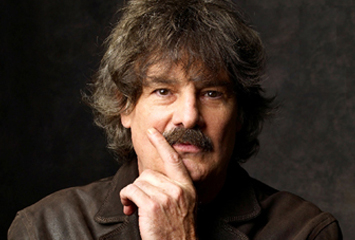
| Billy Steinberg (right) with his longtime writing partner, Tom Kelly. |
Additionally, several of Steinberg’s hits have found success
through numerous incarnations. “True Colors” has been utilized in many
different ways: it was covered by Phil
Collins and became a worldwide hit again; the song was spotlighted for several
years as part of an international Kodak ad campaign; and a new, retitled
version of the song was featured in the hit movie, Save The Last Dance.
In 2003, Kasey Chambers recorded “True Colors” as the theme song for the Rugby
World Cup, and it became a #1 hit in Australia. “I Drove All Night” has been
recorded by Lauper, Roy Orbison and most recently with Celine Dion, whose
version was the primary song used in a major Chrysler ad campaign. Also,
“Eternal Flame” was recorded by British act, Atomic Kitten and reached #1 in
the U.K. in the summer of 2001.
Steinberg, who grew up in Palm Springs, Ca. describes music
as having a very powerful impact on his life from a young age. “I can remember
as a little kid of 6 or 7, listening to records like ‘All I Have To Do Is
Dream’ by the Everly Brothers and Ricky Nelson’s ‘Poor Little Fool.’ Those
songs were really my salvation. They comforted me and took care of me. My
friends enjoyed music, but much to my disappointment, they didn’t seem to have
the same passion about the songs that I did.”
As he grew older, Steinberg enjoyed a number of musical
influences. “In my early teens the Beatles came out, then the Rolling Stones
and the Kinks and all those types of groups. Aside from that, I always loved
the blues. I took a trip to Chicago when I was 16, and really got into the
music of Muddy Waters, Howlin’ Wolf and
Robert Johnson. By the time I got to Bard College in New York (where he majored
in literature), I was really involved in writing my own songs.”
|
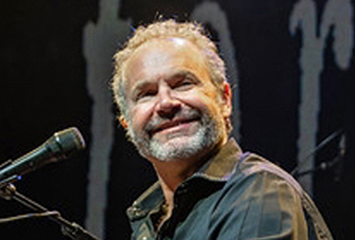
| Billy Steinberg (right), with his writing collaborators, Rick Nowels and Marie Claire D’Ubaldo. |
After college, Steinberg returned to California and formed a
band, Billy Thermal, in the late 1970s (Thermal was the name of the town where
his family owned a vineyard). “What they called ‘New Wave’ started to happen:
Elvis Costello, Talking Heads, early Tom Petty. I started to listen to some of
the songs that were coming out of that, and I began writing music that really
required a rock band. I put together a band to record demos and we really got
along great.” The band was signed to producer Richard Perry’s Planet Records in
1979. One of the demos from this time was Steinberg’s song “How Do I Make You.”
It was recorded by Linda Ronstadt for her 1980 Mad Love album, and it
became Steinberg’s first Top 10 hit. Another song, “Precious Time,” became the
title cut for Pat Benatar’s third album.
In 1981, Steinberg began to collaborate with songwriter and
session vocalist Tom Kelly. “Tom and I had a recording project on Epic Records
called I-10. It wasn’t really a band, just Tom and me.” The album did include
the original version of their song “Alone,” which years later was recorded by
Heart and reached #1.
In 1984, Madonna recorded the Steinberg/Kelly song, “Like A
Virgin” for her second album. “Writing that song was an interesting moment for
Tom and me,” recalls Steinberg. “The first set of songs we wrote together was
really rock. With “Like A Virgin,” I had the lyric, and the leading verse was
really a heartfelt, poignant lyric, and Tom was trying to figure out how to
approach it musically and when it got to the chorus it kind of got stuck. But
the title and the lyric had a lot of power, so I encouraged him not to give up.
So out of frustration, he started playing the bass line, which sounds kind of
like “I Can’t Help Myself” by the Four Tops, fooling around and singing it
falsetto and I said, ‘that’s it!’ So the song got recorded and we added to our
palette with this sort of Motown approach and
went ahead and wrote other songs, including ‘So Emotional’.”
|
| Pictured clockwise from top: Billy Steinberg, Tom Kelly and Chryssie Hynde of the Pretenders.The trio wrote "I'll Stand By You," which was a Top 10 hit for the Pretenders. |
“If you look at any era in music, the good songs,” said
Steinberg, “the songs that have impact get covered again and they seem to
endure. I’m talking about Beatles’ songs, Motown songs, Burt Bacharach, Hal
David songs; these songs stay current.” Some of Steinberg’s songs, such as
“True Colors,” “I Drove All Night,” and “Eternal Flame” certainly fall into
this enduring category. “It pleases me when these songs get new readings
because it shows that the songs have life,” said Steinberg.
As his songs endure, so does Steinberg’s passion for making
music. He continues to collaborate with other writers and share his gift with
others. “I am working with a singer named Mary Born. Paul Inder and I have
co-produced her first CD. After working on it for over a year, it’s nearly
finished, then we’ll be looking at getting it out there. Mary has written many
of the songs herself and she and I have co-written a couple. Also for the first
time in my career, I have signed a young writer named Josh Alexander to my publishing
company (which is called Jerk Awake).”
Steinberg admits he has learned some important lessons
throughout his years as a songwriter. When Billy Thermal was signed to Planet
Records by hit producer Richard Perry (who had produced Carly Simon, Ringo
Starr, the Pointer Sisters) Perry suggested Steinberg rewrite some of the verse
lyrics to one of his songs. “We had a bit of an altercation because I didn’t
want to rewrite and he made a big point of telling me that sometimes when
you’re writing pop songs, you have to do a lot of writing and sort of boil them
down to get the best possible results. He cited Simon’s song ‘You’re So Vain’
and said she wrote many different verses for that song then picked the best
ones. He used this illustration for how I should write. And in fact he was
right. As the years went by, I developed the ability to edit my own work and
realize when I could do better and when something could be improved. I learned
to look over my own shoulder and see what I’m writing and what to change and
what to leave alone.”
Steinberg used the experience of writing “True Colors” to
make his point. “With one of the biggest hits of my career, rewriting was a big
part of the song. When Tom (Kelly) and I started writing that song, it had one
verse, one chorus and after we wrote the music, Tom said ‘that chorus brings a
great universal message and the verse was very personal and specific, and he
said as good as it is that first verse sort of detracts from the universality
of the chorus, and I agreed and eventually rewrote the lyric.”
|
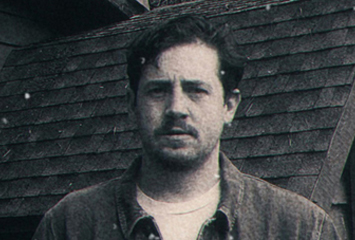
| Billy Steinberg in 1970, with the Gibson guitar that he still uses to write songs. |
In the mid ‘90s, Steinberg teamed up with writer/producer
Rick Nowels and won a Grammy Award for producing their song “Falling Into You”
for Celine Dion. Together, the pair have written for such notable artists as
the Corrs, kd lang, Bette Midler and scored a #1 international hit “I
Turn To You” for Melanie C in 2000.
Steinberg offered some valuable information for aspiring
songwriters. “My advice would be to write a lot of songs and not be too
precious about any individual song. I’ve noticed that sometimes writers who are
trying to get a foothold will write a song and someone will critique it and
they’ll rewrite it and do a new demo and get very attached to one song. I’ve
learned that you want to have a lot of irons in the fire. Write a song to the
best of your ability and if it’s worthy make a demo and keep going and write
another song.” With respect to making
demos, Steinberg believes the production of the demo depends on the song. “Some
songs shine with a basic demo and some songs need a more detailed approach. I
think it’s all based on the song.”
As years pass, one thing in Steinberg’s life remains
constant. “One of the threads that runs through my life is my love for songs.
I’ve never loved anything like that. To this day, I have a fear of flying and I
don’t want my life to be constrained by my fear, so I have this funny little
routine I have that comforts me. The worst thing about flying is the takeoff.
So I carry a cassette of a song called “Pretty Ballerina” by a ‘60s group
called Left Banke. I listen to that song and it makes it tolerable. It’s one of
my favorite songs and it’s very important to me, and it takes care of me on
that plane. I’d like to say ‘thank you’ to the songwriter Mike Brown, if you’re
out there.”
Jayne Moore is a freelance music/entertainment journalist. She has launched a new service, writing bios, articles and press releases. Moore can be contacted at musicgerm@hotmail.com. You can also visit her website: www.musicgerm.com.
Return to Table Of Contents
Return to Top Of Page
|
 |